

How can leaders inspire and motivate their employees? | Safe and Sound
Employees work not only for the salary, but also for the feeling of contributing, developing and becoming an important part of the company. So how can leaders create strong motivation for employees? Below are 5 important strategies suggested by Safe and Sound's psychological experts that businesses can apply to build a passionate and effective working team.
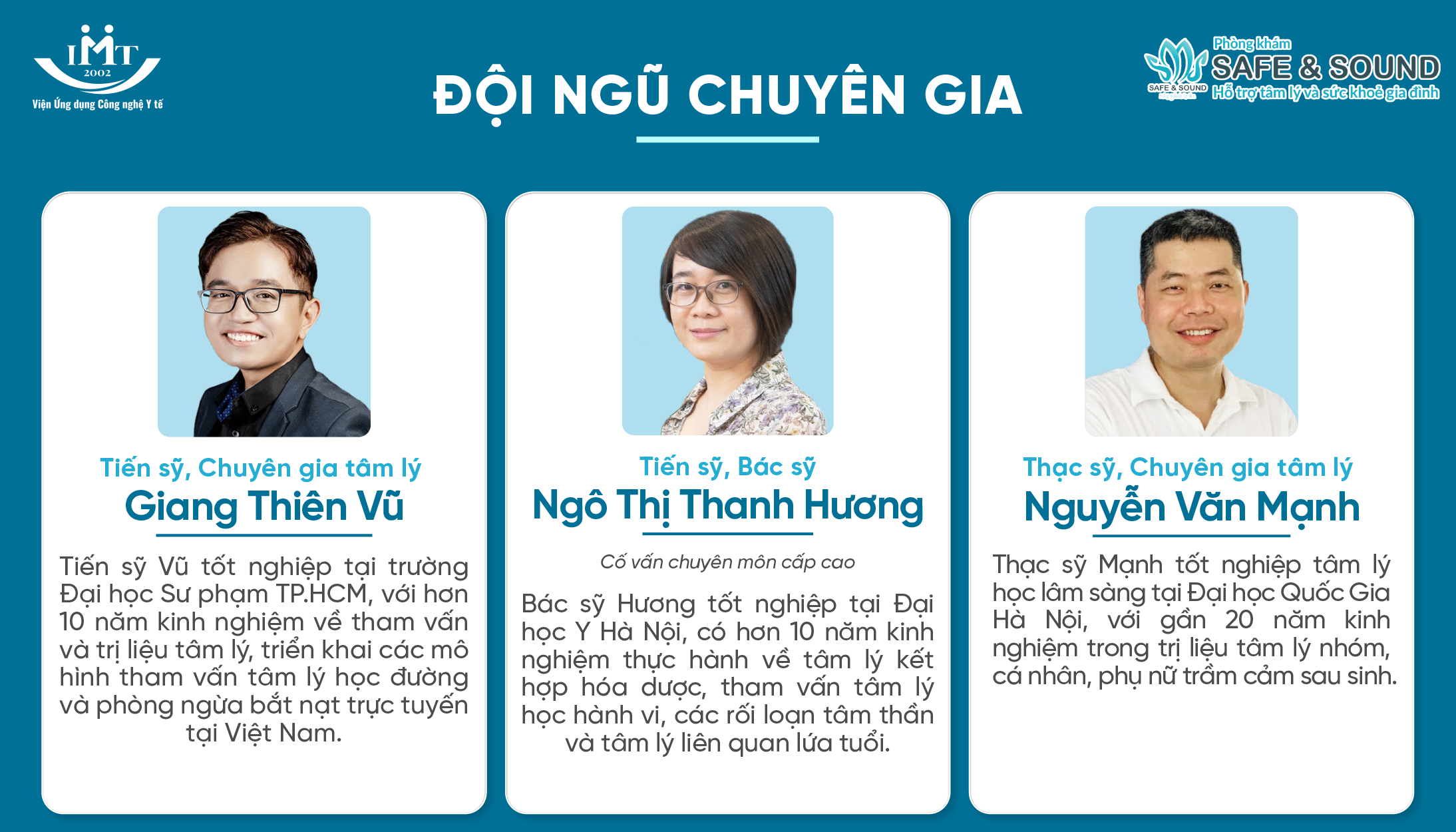
Ngo Thi Sang | Master of Educational Psychology – Applied mental health care Safe and Sound
Institute of Medical Technology Applications
1. Build a clear vision and engage employees with a common goal
A successful organization always has a clear vision and mission. This is not only a compass to help the business develop but also a key factor to motivate employees. When employees clearly understand what they are contributing to a bigger thing, they will have a higher sense of responsibility, work with a sense of commitment and enthusiasm instead of just completing tasks mechanically.

Build a clear vision and communicate it often
Define a clear vision and communicate it regularly
Psychologists say that a company’s vision is not just a slogan, but a guiding principle that is clearly expressed in all activities of the organization. Leaders need to constantly remind about the company’s mission and direction through:
- Internal meetings where employees are updated on the company's status and long-term goals.
- Internal communication materials such as emails, newsletters or company handbooks help employees keep the common goal in mind.
- Real-life stories of company growth, illustrating how individuals can contribute to overall success.
Connect personal goals with business goals
Every employee has their own goals and motivations. Some people want to get promoted, while others are motivated to learn and develop new skills. According to psychologists, leaders need to find ways to connect employees' personal goals with the overall goals of the business, helping them see that their development is not only beneficial to themselves but also contributes to the development of the company.
Communicate regularly about goals and create transparency
Corporate vision and goals cannot be stated once and then forgotten. Leaders need to communicate and update the company's goals regularly so that employees always feel oriented and do not get lost.
Some effective ways to stay connected to a common goal:
- Regular meetings: Not only to check work progress, but also to remind employees of the mission and values they are building together.
- Set goals in stages: Psychologists advise businesses not only to emphasize long-term goals, but also to set small milestones to help employees easily track progress and feel successful in each small step.
- Publicize results and work impact: Share success stories, revenue growth figures, or customer feedback so employees can see how their contributions have made a positive impact.
2. Reward promptly and appropriately
In psychology, according to BF Skinner's behavioral theory, people tend to repeat behaviors that are rewarded. If employees are recognized at the right time, they will continue to develop their abilities and maintain their motivation to work. On the contrary, if their efforts are not recognized, they may lose enthusiasm, even feel underestimated, tired and stressed. A reasonable reward system not only helps individuals develop but also creates a positive working environment, encouraging dedication and creativity.

Reward promptly and appropriately
Instant Rewards
According to psychologists, employees should be recognized when they do a good job, instead of waiting until the end of the quarter or year. Immediate recognition helps reinforce positive behavior and encourages employees to continue their efforts. If recognition comes too late, the motivational effect can be significantly reduced.
Personalize rewards
Not everyone values financial rewards. Psychologists advise leaders to understand the needs and preferences of each employee to have appropriate rewards.
Some effective forms of reward:
- Cash rewards or gifts for those who value financial benefits.
- Public praise in front of the whole company or in meetings to make employees feel proud.
- Intensive training opportunities to help employees improve their skills, especially for those who like to develop themselves.
- Increase authority or responsibility for employees who want to advance in their careers.
Transparency in rewards
Make sure that all reward criteria are clear and transparent, avoiding bias or ambiguity.
Businesses can apply some of the following measures:
- Make reward criteria public from the beginning, ensuring everyone understands them.
- Use a transparent evaluation system with the participation of multiple levels of management to avoid bias.
- Create a feedback mechanism so employees can express their thoughts if they feel they are not being recognized appropriately.
3. Give employees autonomy
Psychologists say that employees are most motivated when they feel they have control over their work and can contribute to how it is done. If they are closely monitored, they are more likely to feel distrusted, passive, and reluctant to innovate. Successful businesses often have a culture that encourages employees to take initiative and take responsibility for their own work results.
Delegate authority within reasonable limits
Delegation does not mean giving employees free rein to do whatever they want without direction. Psychologists say leaders need to set clear but flexible boundaries, allowing employees room to be creative and decide how to do things, as long as the end result achieves the desired goals.
Trust your employees
Leadership trust is an important factor for employees to feel confident and motivated to work.
How to show trust:
- Give employees challenging tasks, rather than just repetitive work.
- Give constructive feedback instead of closely monitoring every step of the way.
- Encourage employees to suggest solutions instead of just following instructions.
Provide the necessary support
Even with empowerment, leaders still need to ensure that employees have the resources and guidance to do their jobs effectively.
Psychologists say there are a few ways to support employees when delegating:
- Training and skill development: Before delegating, make sure the employee has the capacity to do the job.
- Create open lines of communication: Let employees know that they can come to their leaders when they have problems, but they don't have to report every little detail.
- Provide necessary tools and resources: If employees are empowered but do not have enough supporting tools, they will have difficulty completing their tasks.
4. Invest in employee development
If they feel that their job is just a series of repetitive tasks with no opportunity to improve their skills or advance, they are likely to lose motivation, become mentally exhausted and stressed. This can lead to depression, reduced work performance or even looking for opportunities elsewhere.

Provide training and development opportunities
Provide training opportunities
Training programs, seminars and professional courses will help employees improve their skills and become more confident in their work.
- Professional skills training: Courses related to the field of work that help employees perform better in their roles, such as sales skills, project management, or using new technology.
- Soft skills training: Communication skills, time management, problem solving and teamwork are all very important for employees to develop comprehensively.
- Learning from leaders: Experience sharing sessions from managers or industry experts can inspire and help employees better orient themselves.
Support personal development plans
Every employee has their own career aspirations and if the business helps them achieve these goals, they will be more motivated to work.
- Build a personal development plan: This is a roadmap that helps employees identify career goals and the steps they need to take to achieve them.
- Support employees to try new roles: Sometimes, employees may want to explore another area within the company and if given the opportunity, they can develop untapped potential.
- Provide constructive feedback: Employees need regular guidance and feedback to understand their strengths, weaknesses and ways to develop themselves.
Create opportunities for advancement
Psychologists recommend that businesses need to build a transparent and fair promotion system to encourage employees to strive for development.
- Clearly define the promotion path: Employees need to know what they need to do to be promoted to a higher position.
- Evaluation based on actual capacity and contribution: Not only based on seniority, but also need to consider work efficiency and development potential of each individual.
- Promote internally before recruiting externally: When a higher position opens up, prioritize considering capable employees within the company before looking for external candidates.
5. Build a culture of feedback and open communication
If there is only one-way communication from leaders to employees, the work environment can become stressful, tiring and ineffective. On the contrary, psychologists say, an open communication environment helps promote cohesion, strengthen team spirit and improve work performance.
Encourage two-way communication
Hold regular meetings where employees can voice their opinions and suggest solutions. It is important that leaders not only listen, but actually consider and respond to them seriously. Tools such as anonymous surveys or suggestion boxes can also be used to ensure that every voice is heard.
Provide regular and constructive feedback
Don’t just criticize when there are mistakes, guide employees on how to improve and grow. Feedback should be specific, objective, and focused on solutions rather than pointing out mistakes. According to psychologists, a timely compliment or useful advice can help employees feel appreciated and motivated to work harder to improve themselves.
Create a safe environment for employees to share
Employees only dare to express their opinions and feelings when they feel psychologically safe and are not negatively evaluated. Leaders need to encourage openness, not punish opposing opinions and be ready to accept frank comments. When a culture of open communication is built, employees will be more proactive in their work, more creative in problem solving and contribute positively to the overall development of the organization.
Solutions to help businesses create work motivation and build sustainable organizational culture
At Safe and Sound, we not only provide individual psychological counseling services but also accompany businesses in motivating employees and building a positive organizational culture. Through in-depth workshops on work motivation, emotional management, internal communication and mental health, we help your employees improve performance, increase engagement and feel more meaningful in their work.
In addition, Safe and Sound also provides specialized consulting services to help businesses design a working environment that supports personal development, builds effective reward systems and promotes a sustainable corporate culture.
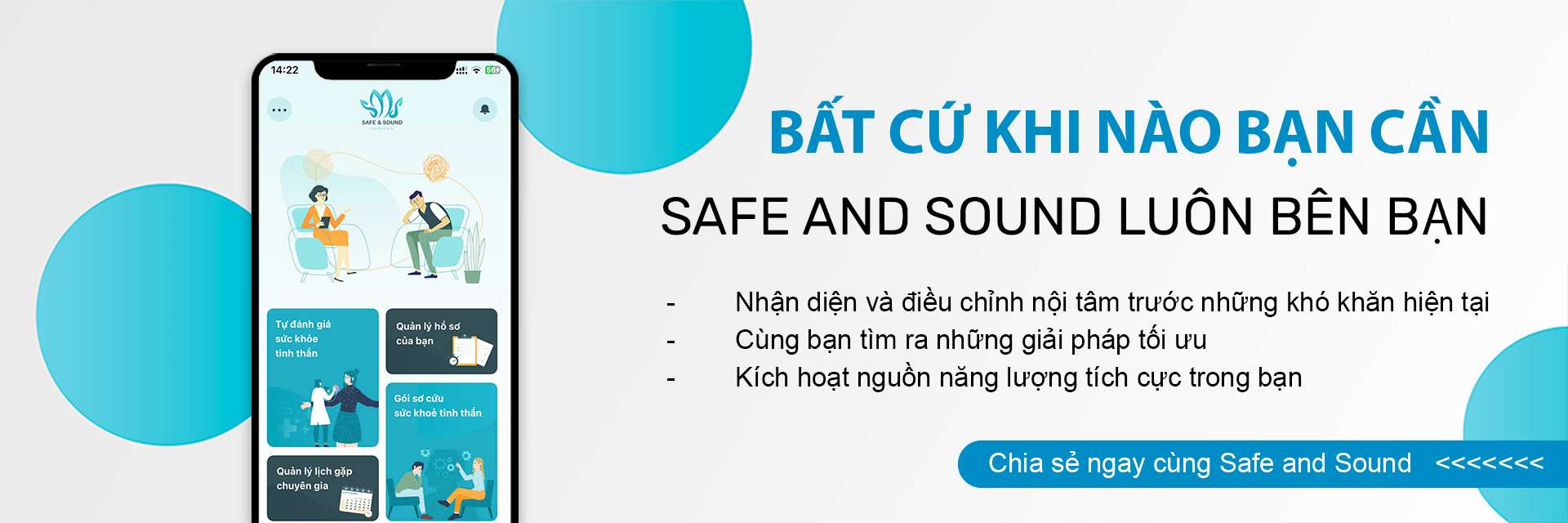
Safe and Sound Clinic - Family health and psychological support
With a team of experienced doctors and specialists, Safe and Sound Clinic is a pioneer in comprehensive health care with health care services from medicine to psychology.
“Early prevention - Timely support - Long-term companionship”.
If you have any doubts or experience any physical or mental health problems, please contact HOTLINE 0964 778 911 (Phone/Zalo, 24/7) for answers and support as soon as possible!
HOW TO MAKE AN APPOINTMENT for online or in-person consultation with an expert
- At SnS Clinic - IMT Institute
- Or download and schedule a consultation on the Safe and Sound app to manage and track your schedule anytime, anywhere.
Safe and Sound (SnS) - Institute of Applied Medical Technology (IMT)

See also:
- How to promote employees' intrinsic motivation, leaders need to know
- 6 ways to stay motivated in work and life
- Increase motivation – increase productivity through happy hormones
